
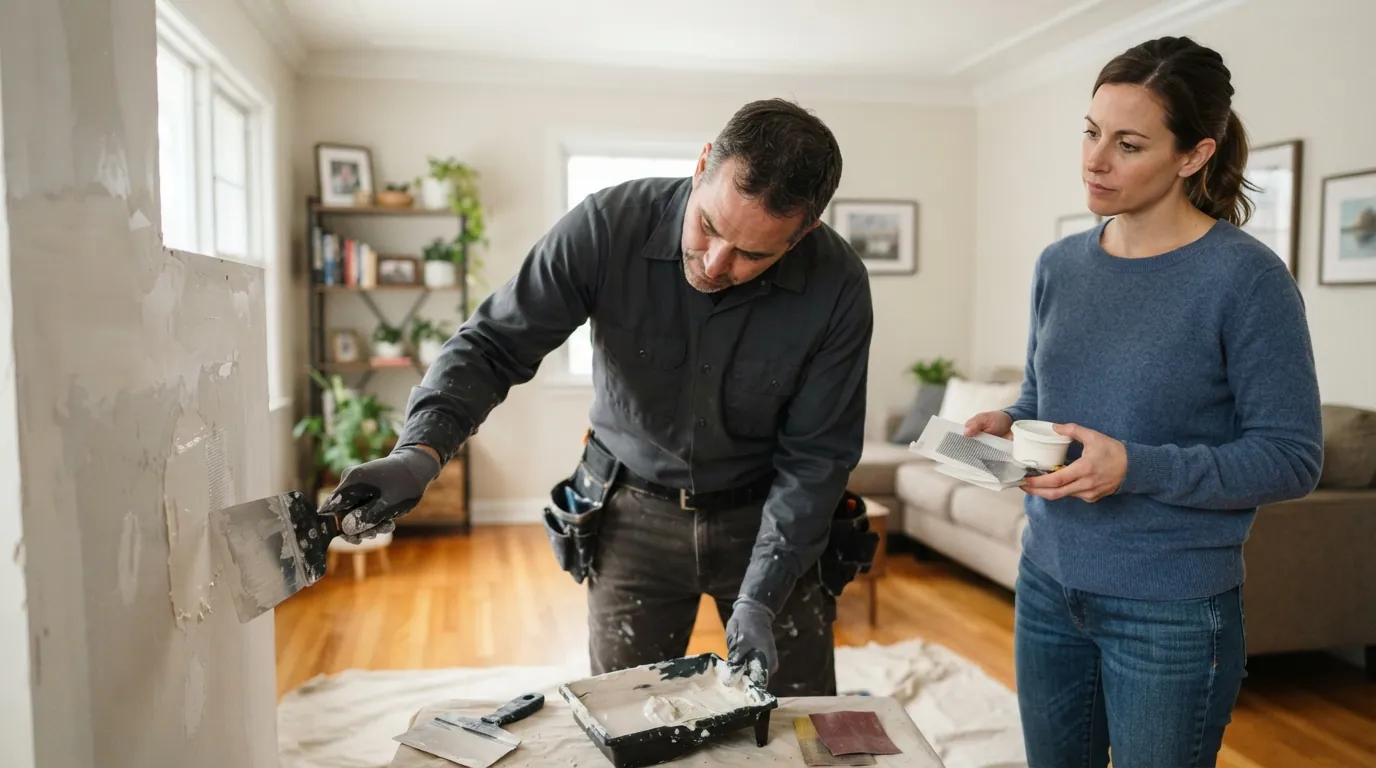
Toledo Drywall Repair: DIY Small Patches or Hire a Pro?
Decide when to DIY small drywall patches (under 4x4 inches) and when to call a Toledo handyman for larger repairs, water damage, or textured walls.
Drywall damage is a common sight in Toledo homes, whether you’re in an older place down in the Old West End or a newer build out towards Sylvania. Life happens. A doorknob punches through the wall, a picture hook pulls out a chunk, or maybe you’ve got a small hole from an old anchor. When you see that damage, you’ve got a decision to make: grab the spackle yourself or call in a local handyman.
It’s not always clear which path is best. Sometimes, a quick DIY patch is all you need. Other times, trying to fix it yourself can turn a small problem into a bigger, more noticeable mess. Let’s talk about how to figure out when to tackle it yourself and when to get a pro on the job.
What a “Small” Drywall Patch Really Means in Toledo
When we talk about a “small” drywall patch, we’re usually thinking about something you can cover with your hand. This means holes roughly 4 inches by 4 inches or smaller. Think about typical damage:
- A hole from a door handle that swung open too hard.
- A spot where a wall anchor pulled out when you moved a heavy mirror.
- Nail pops, which are those little bumps where the drywall screws pushed through the joint compound, common in houses as they settle, especially in older Point Place homes.
- Minor dings or scrapes that only affect the surface paper.
These are the kinds of repairs where the structural integrity of the drywall isn’t compromised beyond the immediate spot. You’re not dealing with large sections of missing drywall or anything that feels soft to the touch.
Tackling Small Drywall Patches Yourself
If you’ve got a small hole or ding, you can absolutely fix it yourself with a few tools and a little patience. For a hole about 2 inches across, here’s a common approach:
First, clean up any loose paper or jagged edges around the hole. You want a clean, stable surface to work on. Next, you’ll need a drywall patch kit. These kits usually come with a self-adhesive mesh patch. You can find them at any hardware store in Toledo, like Ace Hardware on Central Avenue or Menards out west. A small kit typically costs under $10.
Stick the mesh patch over the hole, making sure it covers the entire damaged area and sticks firmly to the wall around it. Then, you’ll apply joint compound, also known as mud. Use a 6-inch putty knife to spread a thin, even layer of mud over the patch, extending about an inch or two beyond its edges. Let that first coat dry completely. This can take a few hours, sometimes longer if it’s humid, like a typical summer day in August.
Once dry, you might need to lightly sand it with fine-grit sandpaper (150-grit usually works well) to smooth out any ridges. Then, apply a second, slightly wider coat of joint compound. Feather out the edges so it blends smoothly into the existing wall. Repeat the drying and sanding process. You might even need a third thin coat, depending on how smooth you want it. The goal is to make the patch invisible to the eye and touch. Finally, prime and paint the area to match your wall color.
The whole process for one small patch, including drying times, can easily take a day or two. If you’re painting it, factor in another few hours for paint coats.
When a Professional Drywall Repair Is the Smarter Choice
Not every drywall problem is a simple fix. There are plenty of situations where calling a professional handyman makes a lot more sense and will save you time and frustration in the long run.
One of the biggest reasons to call a pro is the size of the damage. If you’ve got a hole larger than, say, 6-8 inches across, you’re likely going to need to cut out a section of drywall and install a new piece. This means cutting straight lines, adding wood backing (known as blocking) inside the wall for the new piece to screw into, taping the seams, and then applying multiple coats of joint compound. This is a much more involved process than just sticking a patch over a small hole.
Water damage is another big one. If you’ve got a soft, bulging, or discolored area on your ceiling or wall, especially after a heavy rain or if you’ve had plumbing issues (you can read more about dealing with water damage after a leak in our post on faucet leak repair toledo 2026), it’s usually not just a drywall problem. There’s a leak somewhere. A professional will address the leak first, then cut out the damaged drywall, inspect for mold, and replace the section properly. Just patching over water-damaged drywall is asking for trouble down the road.
Matching textures is also tricky. Many homes, especially those built in the 70s and 80s in neighborhoods like Westgate or Ottawa Hills, have textured walls (orange peel, knockdown, or skip trowel). Getting a patch to blend smoothly with existing texture is an art form. It takes specific tools and techniques that most homeowners don’t have. A poorly textured patch will stick out like a sore thumb, no matter how good the paint job is.
Repairs that are high up, like on a vaulted ceiling, also usually warrant a pro. Working on ladders with tools and messy joint compound can be dangerous if you’re not used to it. And if you’re dealing with plaster walls, common in really old homes downtown or in the Old South End, that’s a whole different ballgame. Plaster repair requires different materials and methods than drywall.
Sometimes, it’s not one big hole, but several small ones scattered across a wall or room. Individually, they might be DIY projects, but patching four or five spots in one room can quickly become a full weekend job. It might be worth having a professional take care of them all at once for a consistent finish. As we discuss in when drywall repair costs more 2026, these multiple smaller issues can add up.
DIY vs. Professional Drywall Repair: A Quick Look
Here’s a simple breakdown to help you decide:
| Feature | DIY Drywall Patch (Small) | Professional Drywall Repair |
|---|---|---|
| Damage Type | Small holes (under 4x4 inches), dings, nail pops. | Large holes, water damage, multiple repairs, textured walls. |
| Time Commitment | A few hours to a full day per patch (drying time). | Depends on scope, often a few hours to a day of active work. |
| Tools Needed | Putty knife, sandpaper, patch kit, joint compound. | Specialized knives, sanding tools, texture sprayers, saws, ladders. |
| Skill Level | Beginner to intermediate. Patience is key. | Expert. Requires experience in blending and finishing. |
| Cost (Materials) | Under $20 for basic patch and mud. | Includes labor, specialized materials, and tools. |
| Result | Can be good, but often visible if not done perfectly. | Near-invisible repair, matches existing finish. |
When to Call Toledo Handyman and Home Repair
If your drywall damage goes beyond a simple, small patch, or if you’re just not confident you can get a smooth, invisible finish, that’s when a local professional comes in handy.
At Toledo Handyman and Home Repair, we handle all sorts of drywall issues. When you call us out, our standard service visit is $89. This covers the diagnostic for what’s going on and any small fixes we can knock out quickly during that time. For bigger drywall jobs – like replacing a large section, fixing water damage, or matching complex textures – we’ll give you a straight number for the work before we even start. You’ll know what to expect.
We’ve got the tools and the know-how to make those larger patches and repairs blend right in, so your walls look as good as new. No crooked lines, no visible seams, no mismatched textures. You can schedule a visit through our portal at https://www.toledohandymanandhomerepair.com/portal. We’re here to help make your home look its best.
Book a visit at https://www.toledohandymanandhomerepair.com/portal or call 419-574-5623. The $89 standard visit covers the diagnostic and small repairs, and you’ll get a straight number on anything bigger before work starts.
Submit it through the portal
$89 standard visit. Same-day quote. Live photos.
Request a Service