
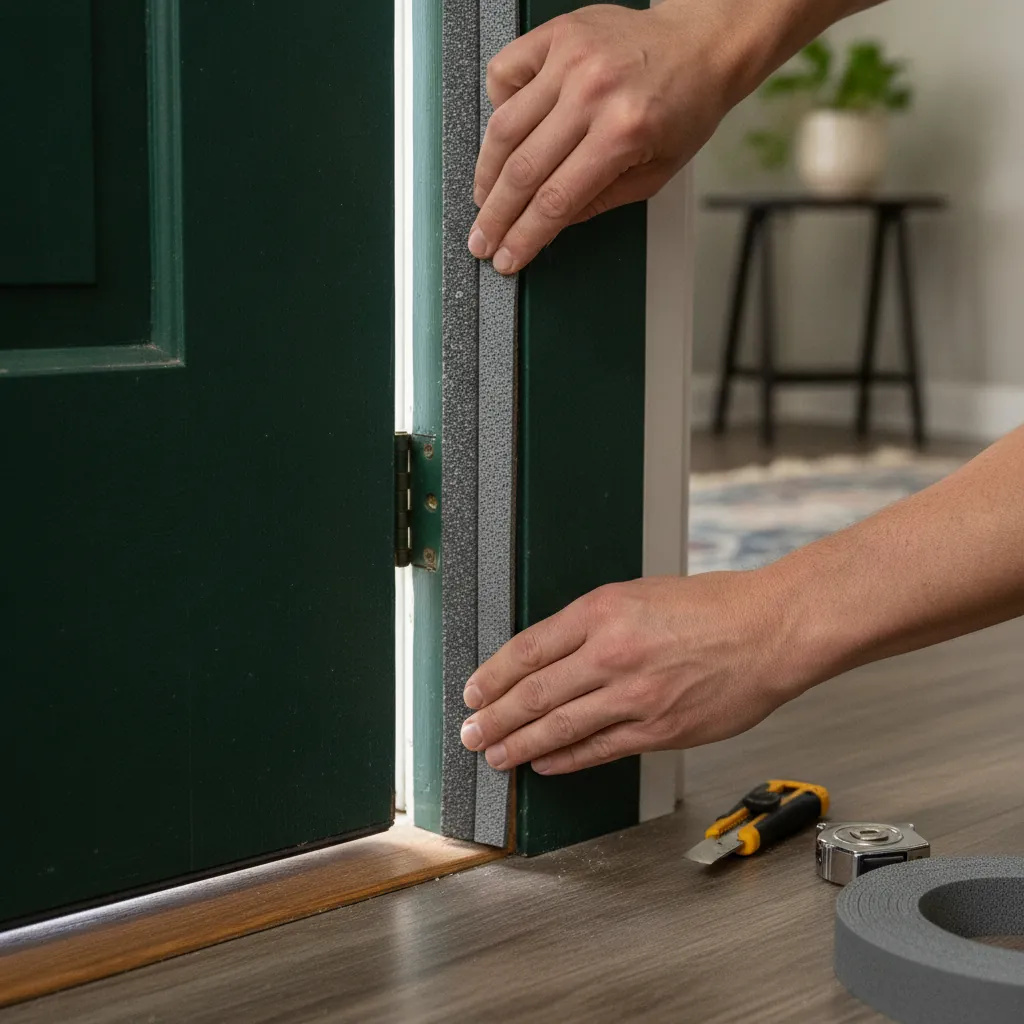
Weatherstripping Drafty Doors in Toledo for 2026
Eliminate cold drafts and lower heating bills in your Toledo home. Learn about effective weatherstripping solutions for doors in 2026.
Winter in Toledo means cold winds blowing off Lake Erie and temperatures that often dip well below freezing. For many homeowners across our area, from the historic homes in the Old West End to the sturdy bungalows in Westgate and the ranches out in Sylvania, those cold temperatures can mean a drafty house. A big culprit? Your exterior doors. If you feel a chill when you walk past your front door, back door, or even the door to your attached garage, you are likely losing heat and money right out of your house.
Weatherstripping is a simple fix that makes a big difference. It is the material that seals the gaps around your doors when they are closed. Over time, this material can wear out, crack, or fall off. When it does, cold air gets in, and warm air goes out. In 2026, just like every year, making sure your doors are properly sealed is a smart move for comfort and for your wallet.
Why Toledo Homes Need Good Weatherstripping
Toledo and Northwest Ohio homes face some real weather challenges. We get our share of ice and snow, and the wind can really pick up, especially when it is coming off the lake. Older homes, common in neighborhoods like Ottawa Hills, Point Place, or the South End, often have solid wood doors and original frames that have settled over decades. These doors are built to last, but their weatherstripping might be as old as the house itself. Even newer homes can have issues if the original weatherstripping was not top-quality or if it has seen a few too many harsh winters.
A good seal around your door does more than just stop drafts. It also keeps out dust, bugs, and outside noise. For a Toledo home, where we experience a wide range of temperatures throughout the year, from humid summers to frigid winters, a tight seal helps keep your indoor climate steady. This means your furnace or air conditioner does not have to work as hard, which saves energy.
How Much Heat Actually Escapes?
It is easy to underestimate how much heat can escape through a small gap. Think about a standard exterior door, about 3 feet wide. If that door has a consistent 1/8-inch gap around its top, sides, and bottom, that is like having a hole in your wall about 6 inches in diameter, open to the outside all winter long. Imagine trying to heat your house with a 6-inch pipe letting cold air in. That is a lot of warm air going out and cold air coming in, constantly.
For a typical 1,500 square foot Toledo home, a single unsealed exterior door can easily account for 10-15% of your total heat loss during the coldest months. That percentage adds up quickly on your utility bill. Sealing that one door can make a noticeable difference in how warm your living room feels, especially if that door is in a high-traffic area.
What Kinds of Weatherstripping Work Best Here?
There are a few main types of weatherstripping, and the right choice often depends on your door type and the size of the gap you are trying to close. For Toledo’s climate, you want something durable that can handle temperature swings.
- Foam or Felt Strips: These are usually self-adhesive and easy to install. They work well for smaller, irregular gaps. They are good for interior doors or less exposed exterior doors, but they do not always hold up to heavy use or extreme weather on a main entry door. They are often a temporary fix.
- V-Strip (Tension Seal): This is a thin, flexible strip of metal or plastic that folds into a “V” shape. When the door closes, the V compresses, creating a seal. It is durable and effective for gaps along the sides and top of a door frame. It is a good choice for older Toledo homes where door frames might not be perfectly square anymore.
- Compression Strips: These are typically made of rubber, vinyl, or silicone. They are installed into a groove in the door frame, and the door presses against them when closed. This creates a very tight, long-lasting seal. These are excellent for Toledo’s harsh winters and are often found on newer, energy-efficient doors. They are a solid choice for any main entry door.
- Door Sweeps or Bottom Seals: These attach to the bottom of the door and seal the gap between the door and the threshold. There are various designs, from simple brush sweeps to more vinyl or rubber flaps that compress against the threshold. For homes with uneven thresholds or those that see a lot of snow accumulation, a good quality door sweep is crucial.
For most Toledo homes, a combination of compression strips for the sides and top, paired with a sturdy door sweep, offers the best protection against our local weather.
Can You Spot a Drafty Door?
Yes, you can. You do not need special equipment to figure out if your doors are letting in cold air. Here are a couple of simple ways to check:
- The Hand Test: On a cold, windy day, just stand near your closed exterior door and slowly move your hand around the frame, especially along the bottom, sides, and top. If you feel a distinct cold breeze, you have found a draft.
- The Candle or Incense Test: Light a candle or a stick of incense and hold it near the edges of your closed door. If the flame flickers or the smoke wavers and gets pulled inward or outward, that indicates air movement, meaning a leak. This test is very effective for finding even small gaps.
- The Dollar Bill Test: Open your door and place a dollar bill across the weatherstripping, then close the door. If you can easily pull the dollar bill out, the weatherstripping is not creating enough compression. If it is snug and you have to tug to get it out, your seal is probably good in that spot. Repeat this around the entire door frame.
These quick checks will tell you exactly where your doors are failing to keep the cold out. If you find multiple spots, it is probably time for new weatherstripping.
A Typical Weatherstripping Job: What to Expect
When Toledo Handyman and Home Repair comes out for a weatherstripping job, we start by inspecting all your exterior doors. We look at the existing weatherstripping, the condition of the door frame, and the door itself. For a standard front door, the process usually goes something like this:
First, we carefully remove the old, worn-out weatherstripping. This often involves prying off old strips, scraping away dried-up caulk, and cleaning the door frame thoroughly. We make sure the surface is clean and smooth so the new material adheres properly.
Next, we measure and cut the new weatherstripping to fit precisely. For compression strips, this means fitting them into the existing grooves or installing new channels if needed. For door sweeps, we might need to trim the sweep to the exact width of your door and attach it securely with screws. We pay close attention to corners and where different pieces meet to create a continuous seal.
Finally, we test the door. We open and close it several times to make sure it latches properly and that the new weatherstripping creates a tight seal without making the door too hard to close. A typical door weatherstripping job, including cleanup, usually takes about 1 to 2 hours, depending on the door’s condition and the type of weatherstripping used. Our goal is to leave you with a door that shuts tight, keeps the drafts out, and feels solid.
Real Savings for Toledo Homeowners
Putting in new weatherstripping is not just about comfort, it is about saving money on your utility bills. Consider a Toledo home that has three exterior doors, all with worn-out weatherstripping. By replacing the weatherstripping on these doors, you could realistically reduce your heating costs by 10-15% during the coldest months of December, January, and February.
If your average gas bill for heating in those months is $150, a 10% saving means $15 less each month, or $45 over the winter. Over five years, that is $225 in savings just from stopping drafts. It is a small investment that pays for itself pretty quickly, especially with energy prices being what they are. Plus, your home will feel much more comfortable, without those cold spots near the doors.
Is It a DIY Job or Do You Call a Handyman?
Some types of weatherstripping, like simple adhesive foam strips, are fairly easy for a homeowner to install. If you are comfortable with basic tools, measuring, and cutting, you might be able to tackle a simple job yourself. However, for more durable and effective solutions like compression strips or installing a new door sweep that requires drilling and precise alignment, it can get a bit trickier.
Getting it wrong means the weatherstripping might not seal properly, or it could even interfere with the door closing smoothly. If you want a long-lasting, effective seal that you do not have to worry about, calling in a local handyman is a smart choice. We have the right tools, the experience, and know the best materials for Toledo’s climate. We can get the job done right the first time, saving you frustration and making sure your home is truly sealed against the cold.
If you are tired of drafts and high heating bills, give Toledo Handyman and Home Repair a call. We are your local crew for home repairs and maintenance across Toledo and Northwest Ohio. We can take care of those drafty doors and many other projects around your house. You can reach us at 419-574-5623. Our standard visit is just $89, and we will get your home feeling warmer and more efficient. For easy booking, visit our portal at /portal.
FAQ
Q: How long does typical weatherstripping last in Toledo’s climate? A: Good quality, properly installed weatherstripping, like compression seals, can last 5 to 10 years before needing replacement.
Q: How much can new weatherstripping reduce my heating bill? A: Replacing worn weatherstripping on all exterior doors in a typical Toledo home can reduce your heating bill by 5% to 15% during the winter months.
Q: How many exterior doors does the average Toledo home have? A: Most Toledo homes have 2 to 3 exterior doors, including the main entry, a back door, and often a door to an attached garage.
Q: What is the average temperature difference a good seal can make near a door? A: A well-sealed door can raise the indoor air temperature near the door frame by 3 to 5 degrees Fahrenheit compared to a drafty door.
Submit it through the portal
$89 standard visit. Same-day quote. Live photos.
Request a Service