
Common Interior Door Problems in Toledo Homes and Repairs
Toledo homes face common interior door issues like sticking, squeaking, or loose hardware.
Interior doors often get overlooked until they start acting up. A door that sticks, squeaks, or won’t latch right can be a real nuisance in your Toledo home. From the older houses in the Old West End or Point Place to the ranches in Westgate or the South End, doors can show their age or react to our local climate.
Our humid summers near Lake Erie can make wood swell, then the dry winter air can shrink it back down. This constant movement takes a toll on door frames, hinges, and the doors themselves. Most of the time, you can figure out what’s wrong with a little inspection. Sometimes, it’s a quick fix. Other times, it’s a bigger job that might need a local handyman.
Here’s a look at common interior door problems Toledo homeowners face and what might be going on.
Doors That Stick or Drag
A sticking door is probably the most common complaint. It can be frustrating to push or pull harder just to get a door to close, or worse, have it scrape across your flooring.
- Problem: Door rubs against the frame.
- Reason: This often happens at the top or side. High humidity in July and August can make wood doors swell. Or, the house might have settled a bit over the years.
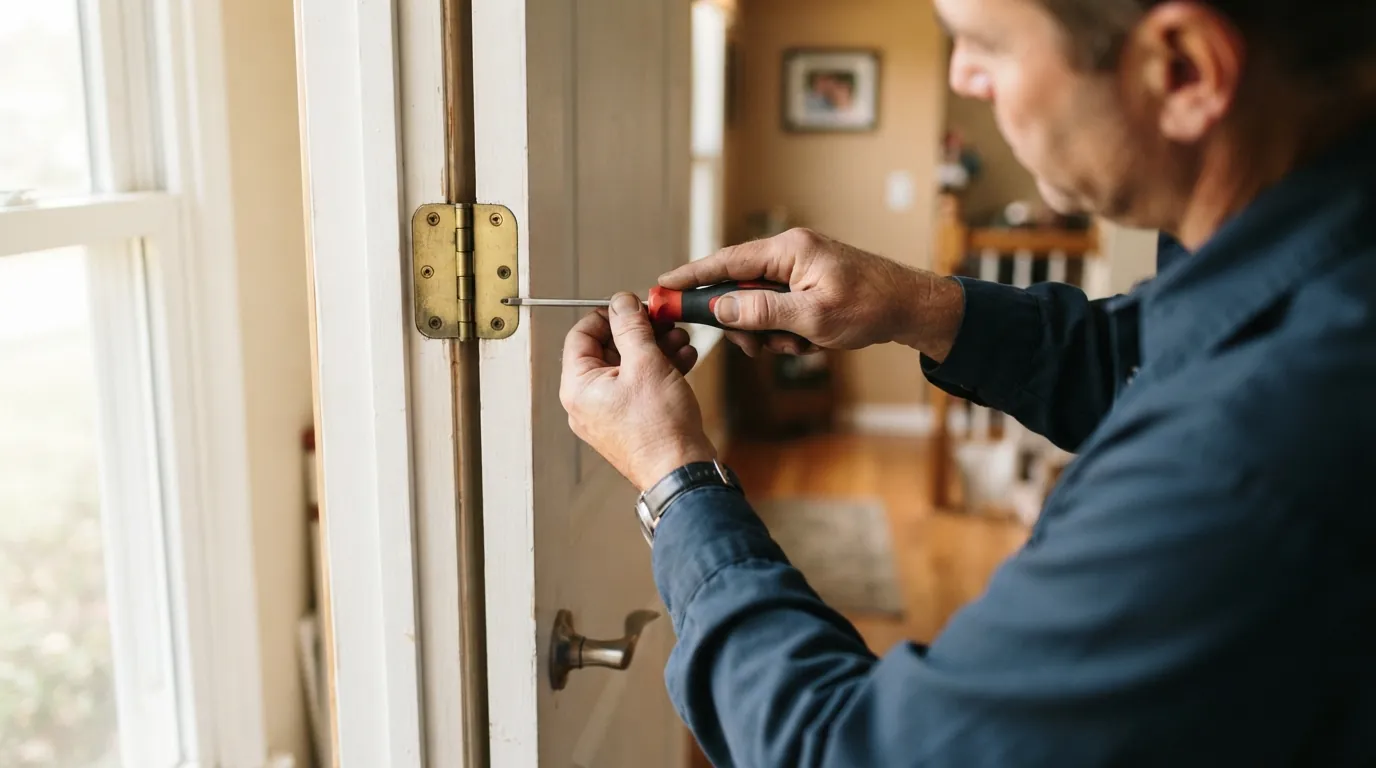
- Simple fix: Check the hinge screws. If they’re loose, tightening them can often pull the door back into alignment. Use a Phillips head screwdriver and snug them up. Start with the top hinge on the frame side.
- Advanced fix: If tightening screws doesn’t work, you might need to remove a hinge and shim it with thin cardboard to adjust the door’s position. For more serious rubbing, especially on the latch side, a bit of planing the door edge might be needed. This is a job that needs precision so you don’t take off too much wood.
- Problem: Door drags on the floor or carpet.
- Reason: Again, humidity can cause swelling, making the bottom edge scrape. Or, the house may have settled, causing the door frame to drop slightly. If you’ve installed new carpet or flooring, the door might now be too long.
- Simple fix: Check the hinge screws first, especially the bottom hinge screws on the door and frame. Loose screws let the door sag.
- Advanced fix: If the door itself is too long, it will need to be removed and trimmed from the bottom. This usually means taking an inch or less off with a saw, which requires careful measuring and a steady hand to get a clean, straight cut.
Squeaky Hinges
A squeaky door can be annoying, especially at night when you’re trying not to wake anyone. It’s usually an easy fix.
- Problem: Hinges make a high-pitched squeak.
- Reason: The metal pins in the hinges are rubbing against the hinge knuckles, usually due to lack of lubrication or rust. This is common in older homes, and even newer ones if they haven’t been oiled in a while.
- Simple fix: Apply a few drops of household lubricant (like 3-in-1 oil or WD-40) directly onto the hinge pin and the knuckles. Open and close the door a few times to work the oil in. You can also try removing the hinge pin, cleaning it, lubricating it, and then putting it back.
- When to call: If the squeaking continues after lubrication, or if the hinges themselves are bent, rusted through, or falling apart, they might need replacing. Sometimes, the screws holding the hinges are stripped, which means the hinge isn’t held firmly, allowing for more movement and noise.
Loose or Wobbly Doors
A door that feels loose or wobbly when you open and close it isn’t just annoying; it can eventually lead to more serious issues like damaged door frames or hinges.
- Problem: Door swings unevenly or feels unstable.
- Reason: The most common cause is loose hinge screws, either in the door itself or in the door frame. Over time, constant use can loosen these screws. In older homes, especially in areas like the Old Orchard or DeVeaux neighborhoods, the wood around the screws can become stripped.
- Simple fix: Tighten all the hinge screws with a screwdriver. If a screw just spins without tightening, it means the wood is stripped. You can try a slightly longer or thicker screw. Another trick is to remove the stripped screw, insert a wooden toothpick or two (with a bit of wood glue if you have it) into the hole, break them off flush, and then reinsert the original screw. The wood will grab the screw again.
- Advanced fix: If multiple screws are stripped, or if the door frame itself is damaged or separating from the wall stud, it’s a bigger job. This might involve disassembling part of the door frame or even replacing a section of the jamb. This kind of repair can be tricky, and if you’re not comfortable tackling it, it’s a good time to call in a pro.
- Problem: Door knob or latch is loose.
- Reason: The screws holding the doorknob assembly together or the latch plate to the door edge can loosen. This is just from everyday use.
- Simple fix: Tighten the screws on the doorknob’s faceplates and the screws on the latch plate on the edge of the door. Sometimes, a tiny Allen wrench is needed for a set screw on the knob itself.
Damaged Door Jambs or Trim
The door jamb is the frame that the door closes into. The trim is the decorative molding around the jamb. Both can take a beating over the years.
- Problem: Cracks or splits in the door jamb.
- Reason: Hard impacts from opening the door too wide, house settling, or dry rot from moisture can cause the jamb to crack. This is more common in high-traffic areas or around doors that are frequently slammed.
- Simple fix: For small cracks, wood filler or spackle can be applied, sanded smooth, and painted.
- Advanced fix: If the jamb is severely cracked, splintered, or if the door latch plate is no longer secure because the wood is too damaged, a section of the jamb might need to be replaced. This often involves careful cutting and fitting of new wood, followed by painting to match. This can be a more involved repair, especially if the damage is structural.
- Problem: Dings, dents, or gaps in the door trim.
- Reason: Everyday wear and tear, moving furniture, or even changes in humidity can cause trim to separate from the wall or get damaged.
- Simple fix: Small dings and dents can be filled with wood putty, sanded, and painted. Gaps between the trim and the wall or jamb can often be filled with a paintable caulk.
- When to call: If sections of the trim are missing, severely split, or if the trim itself is loose and constantly pulls away from the wall, it might need to be re-nailed, glued, or replaced entirely.
Worn or Damaged Latches and Knobs
When a door won’t stay closed, or the knob just spins, it’s usually a problem with the latch or the internal mechanism of the doorknob.
- Problem: Door won’t latch or stay closed.
- Reason: The latch mechanism inside the door might be worn out, or the strike plate on the door frame might be misaligned. Swelling or shrinking wood can throw the alignment off.
- Simple fix: First, check the strike plate on the door frame. Look for wear marks where the latch bolt hits. If it’s off by a small amount, you can sometimes loosen the strike plate screws, adjust its position slightly, and re-tighten. For bigger misalignments, you might need to chisel out a bit of wood from the strike plate mortise to allow the plate to move.
- Advanced fix: If the latch mechanism itself is broken, the entire doorknob assembly will need to be replaced. This is usually a straightforward process, but choosing the right size and style is important. Our door repair service covers these kinds of replacements too.
- Problem: Doorknob spins freely or doesn’t engage the latch.
- Reason: The internal components of the doorknob are worn out, broken, or have become disconnected. This is common in older, heavily used knobs.
- Simple fix: Sometimes, a loose set screw on the doorknob’s shaft is the culprit. Tightening this screw with an Allen wrench can fix it.
- Advanced fix: Most often, if a doorknob spins freely, the internal parts are stripped or broken beyond repair, and the entire doorknob assembly needs to be replaced.
When to Call a Handyman for Interior Door Repairs
Many of these issues are minor and can be tackled by a homeowner with basic tools. But sometimes, a repair is more involved than just tightening a screw or applying a bit of oil. If you’re dealing with:
- Stripped screws that won’t hold.
- Doors that need planing or trimming.
- Damaged or rotting door jambs.
- Hardware that needs replacing.
- You don’t have the right tools or the time.
- You just prefer to have it done right the first time.
That’s when Toledo Handyman and Home Repair can step in. We know the ins and outs of Toledo homes and their doors. We’ve seen everything from sticky doors in a 1920s bungalow in the Ottawa Hills area to a stubborn latch on a 1960s ranch door. If your door issues are more than you want to handle, or if you’re thinking about other home maintenance like fixing a leaky faucet, we can help with that too. You can learn more about general door repairs on our dedicated door repair service page.
Our standard service visit is $89. This covers the diagnostic process and often includes small fixes on the spot. If the job is bigger, like replacing a door or repairing significant frame damage, we’ll give you a clear, straight number for the work before we start. You can easily book a visit through our online portal.
Need it fixed? Call 419-574-5623 or book online at https://www.toledohandymanandhomerepair.com/portal. A standard visit is $89 and covers the diagnosis plus small fixes.
Submit it through the portal
$89 standard visit. Same-day quote. Live photos.
Request a Service