
How to Clean Your Deck in Toledo: Wood & Composite Methods
Clean your Toledo deck effectively. Learn methods for wood (oxygen bleach) and composite (mild soap) decks, plus pressure washing tips for Northwest Ohio.
For homes here in Toledo and across Northwest Ohio, the best way to clean your deck usually comes down to two things: what kind of deck you have and how dirty it is. Most of our decks are either pressure-treated pine, cedar, or one of the newer composite materials. Each type needs a slightly different approach, but generally, a good scrub with the right cleaner and rinsing it properly will get the job done.
Knowing Your Deck Material Matters
Before you grab any cleaner or power washer, take a good look at your deck. Is it wood or composite? This is the biggest factor in deciding your cleaning method.
Cleaning Wood Decks (Pressure-Treated, Cedar, Redwood)
Most of the wood decks you see around places like South Toledo or Sylvania are made from pressure-treated pine. You’ll also find older homes, especially in areas like the Old West End or Ottawa Hills, with cedar or even redwood decks. Wood is porous, meaning it soaks things up. This makes it prone to algae, mildew, and dirt getting embedded in the grain.
For a basic cleaning, start by sweeping off all the loose leaves and dirt. Use a stiff-bristle push broom to get everything off. Then, you’ll need a good deck cleaner. There are a few kinds that work well here in Toledo.
Oxygen Bleach Cleaners: Products with sodium percarbonate, often called oxygen bleach, are usually your safest bet for wood. You mix them with water, apply them with a pump sprayer or a mop, let them sit for 10-15 minutes (don’t let it dry!), and then scrub with your broom. These cleaners lift dirt and mildew without damaging the wood fibers as much as chlorine bleach can. They’re also biodegradable, which is good for your plants around the deck. For particularly stubborn spots, a second application and a bit more scrubbing might be needed. Rinse thoroughly with a garden hose. Make sure to rinse until all suds are gone.
Chlorine Bleach Solutions: Some folks use a very diluted chlorine bleach solution (about 1 part bleach to 4 parts water). This can be effective against tough mold and mildew. However, chlorine bleach can lighten the wood, kill nearby plants, and isn’t great for the environment. If you go this route, always pre-wet your plants with plain water and rinse them again immediately after rinsing the deck. Wear old clothes and eye protection. I generally lean towards oxygen bleach for most wood decks.
Brighteners: After cleaning a wood deck, especially if it’s been a while, you might notice the wood looks a bit dull or dark. A “deck brightener,” which often contains oxalic acid, can help restore the wood’s natural color. You apply it after cleaning, let it sit, and then rinse. It’s not always necessary, but it can make a big difference, particularly on cedar or redwood, bringing back that warm tone.
Cleaning Composite Decks (Trex, Azek, Fiberon)
Composite decks are becoming more common in newer developments around Perrysburg or Monclova. These decks are made from a mix of wood fibers and plastic. They’re low maintenance, but they still get dirty. Mold, mildew, and general grime can build up, especially in shady, damp spots.
The good news is composite decks are less absorbent than wood. You can typically use milder cleaners.
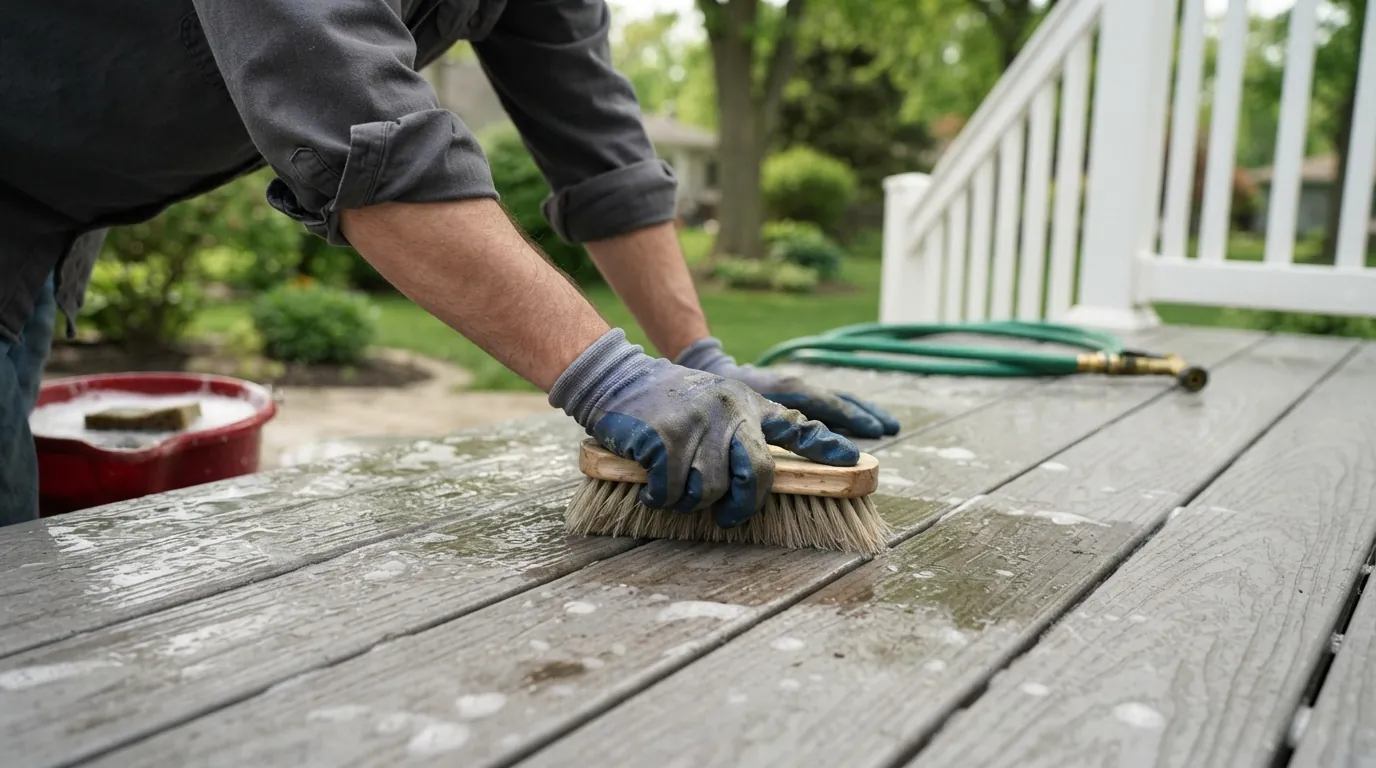
Soap and Water: For most composite decks, a good scrub with warm water and a mild dish soap solution (like Dawn) works wonders. Sweep off debris, then apply the soapy water with a soft-bristle brush or sponge. Scrub gently in the direction of the grain. Rinse thoroughly with a garden hose. Avoid stiff brushes or abrasive cleaners, as they can scratch the surface of some composite materials.
Specialized Composite Cleaners: There are also cleaners made specifically for composite decking. These are formulated to tackle mold and mildew without damaging the plastic components. Follow the manufacturer’s instructions carefully. Many of these are similar to oxygen bleach cleaners but might have additional surfactants.
Avoid Chlorine Bleach and Pressure Washing (with caution): Most composite deck manufacturers advise against using chlorine bleach, as it can potentially stain or degrade the material over time. Also, be very careful with pressure washers. While some composite decks can handle low-pressure washing, high pressure can permanently etch or damage the surface, voiding warranties. If you do use a pressure washer, keep the nozzle moving, use a wide fan tip (like a 40-degree tip), and keep the pressure below 1500 PSI, standing at least 12-18 inches away from the surface.
Dealing with Pressure Washing Properly
A pressure washer can be a powerful tool, but it’s a double-edged sword. Used incorrectly, it can blast away wood fibers, leave permanent marks, or even damage composite material.
For wood decks, a pressure washer can strip away grime and old stain efficiently. The key is to use the right pressure and technique.
- Pressure: Keep it between 500-1200 PSI for most wood decks. Too high, and you’ll “fuzz” the wood, making it look splintered and rough.
- Nozzle: Use a 25-degree (green) or 40-degree (white) fan tip. Never use a zero-degree (red) nozzle; it’s like a knife and will gouge your deck.
- Technique: Hold the wand about 12-18 inches from the surface and sweep in long, even strokes, overlapping slightly. Keep the nozzle moving at all times. Don’t stop in one spot. Always go with the grain of the wood.
For composite decks, be extra cautious. As mentioned, many manufacturers don’t recommend pressure washing, or only with very low pressure (under 1500 PSI) and a wide fan tip. Always test a small, inconspicuous area first to make sure it doesn’t damage the surface.
No matter the material, always wear safety glasses and closed-toe shoes when pressure washing. It’s a powerful tool and can kick up debris.
The Toledo Climate and Your Deck
Our Northwest Ohio weather plays a big role in how often your deck needs cleaning. We get plenty of rain, high humidity in the summer, and that freeze-thaw cycle in winter. This creates a perfect environment for mold, mildew, and algae to grow, especially on decks that get a lot of shade from trees or the house itself.
- Spring: After the snow melts and before pollen really kicks in, a good cleaning can remove the winter’s accumulation of grime. This is also a good time for a thorough deck inspection, as outlined in our post about spring deck check toledo 2026.
- Summer: Regular sweeping helps. If you have a lot of traffic or spills, spot cleaning might be needed.
- Fall: Before the leaves start to pile up, sweep regularly. Wet leaves left on a deck for too long can create stains and promote mildew growth. A quick rinse or light cleaning might be good after the bulk of the leaves are down.
Aim for at least one good, thorough cleaning per year, typically in the spring. If your deck is under heavy shade or gets a lot of use, you might need two cleanings.
Don’t Forget to Seal or Stain Wood Decks
Once your wood deck is clean and completely dry (give it 2-3 sunny days), it’s a great idea to apply a new coat of stain or sealant. This protects the wood from moisture, UV rays, and helps prevent future mold and mildew growth. It also makes future cleanings easier. There are many types of stains – transparent, semi-transparent, and solid – each offering different levels of protection and color. Choose one that’s designed for our climate and your type of wood. This is a task that can really prolong the life of your deck.
Composite decks usually don’t need sealing or staining, which is one of their main advantages.
When to Call in a Professional
Cleaning a deck can be a pretty satisfying DIY job. However, there are times when it makes sense to get some help.
- Large or neglected decks: If your deck is huge, or if it hasn’t been cleaned in years and has a thick layer of grime, moss, or old peeling stain, it can be a big project.
- Lack of equipment: You might not have a pressure washer or the right cleaners on hand.
- Time constraints: Life in Toledo gets busy. You might not have a whole weekend to dedicate to deck cleaning.
- Uncertainty: If you’re not sure about the best method for your specific deck material, or if you’re worried about damaging it with a pressure washer, a professional can step in.
Here at Toledo Handyman and Home Repair, we handle deck cleaning as part of our general deck and patio services. We know the local housing stock and what works best for our climate. We can assess your deck’s condition, recommend the right cleaning method, and get it done safely and effectively. For bigger jobs like a full deck cleaning, we’ll give you a straight number for the work before we start. If you just need us to come take a look and give advice, our standard service visit is $89 and often covers the diagnostic plus any small fixes we can do on the spot.
Questions people ask
How often should I clean my deck? For most Toledo homes, a thorough cleaning once a year, usually in the spring, is a good schedule. If your deck is heavily shaded or gets a lot of traffic, you might need a second light cleaning in the fall.
Can I use a regular garden hose instead of a pressure washer? Yes, a garden hose with a good spray nozzle is often enough for light cleaning and rinsing, especially on composite decks or for maintenance cleaning. For tougher dirt, mildew, or old stain, a pressure washer is more effective but requires careful use.
What’s the best time of day to clean a deck? It’s best to clean your deck on a cloudy day or in the morning/late afternoon. This keeps the cleaning solution from drying too quickly on the surface, letting it work longer and preventing streaks.
Will deck cleaning kill my plants? Some deck cleaners, especially those with chlorine bleach, can harm plants. Always pre-wet any nearby vegetation with plain water before applying cleaner, and rinse plants thoroughly again after rinsing the deck. Oxygen bleach cleaners are generally safer for plants.
Book a visit at https://www.toledohandymanandhomerepair.com/portal or call 419-574-5623. The $89 standard visit covers the diagnostic and small repairs, and you’ll get a straight number on anything bigger before work starts.
Submit it through the portal
$89 standard visit. Same-day quote. Live photos.
Request a Service